Bellina
It’s that time of year again — the cactus and succulents are coming outside.
If you watched my last video you already got the full tour of my collection, every plant up close. Now that everything is pulled out and accounted for, it’s time to move them to the balcony for the season and talk through exactly how I care for them from spring all the way through summer.
In this post I’m walking you through my entire process — from what I did over winter to keep them alive, to how I set up my south facing balcony, to what I actually do week by week once they’re outside. Whether you’re moving your plants outside for the first time or you’ve been doing this for years, there’s something in here for you.
📺 Watch the videos: 🌵 Cactus & Succulent Tour — Spring 2026 (Part 1 — inside tour): youtu.be/Gw-SPwaBV-E 🌵 Moving My Cactus & Succulents Outside — Balcony Edition (Part 2 — this video): youtu.be/TVdBOjgDU_k
Winter Care — What I Did to Keep Them Alive
A lot of people think you have to completely stop watering cactus and succulents in winter. I actually don’t do that. I just pull way back.
Every couple of weeks I give each plant a small amount of water — just a few drops directly on the media or around the edge of the pot. The idea is simple: if the roots are active, they’ll drink it up. If the plant is fully dormant, the amount is so small that it evaporates quickly and doesn’t cause any rot or moisture issues.
This isn’t a fixed schedule so much as checking in on each plant individually. If something looks a little shrivelled or the tissue is starting to pucker, it gets a bit more water. If it looks plump and healthy, it gets even less. You’re not trying to push growth in winter — you’re just keeping them alive and comfortable until spring.
My winter watering rule of thumb: a few drops every two weeks on average, adjust based on how the plant looks, and always water lightly enough that the media dries out completely within a day or two.
Even in winter I always include a small amount of fertilizer in my water. Nothing heavy — just a diluted amount to make sure the roots aren’t going completely without nutrients for months at a time. This habit carries through the entire year for me.
When to Move Your Plants Outside
Timing is everything when it comes to moving cactus and succulents outside. Move them out too early and a cold night can stress the plants, especially if there’s any moisture in the soil.
I wait until nighttime temperatures are consistently above 10°C (50°F) before anything goes out. That’s my line. Below that and the risk of cold damage goes up — particularly for smaller or more sensitive species.
If you’re in Ontario, that window typically opens in mid to late May depending on the year, but always check your local forecast for that week’s overnight lows before you start hauling pots out.
Setting Up the Balcony
My balcony is south facing, which means it gets intense direct sun for most of the day. That’s fantastic for cactus and succulents but it also means I have to be thoughtful about where I place things, especially in that first week.
When the plants first come out they’ve been living indoors for months — under grow lights or in lower natural light conditions. Even plants that thrive in full sun need a transition period. Going from indoor light directly into a full sun balcony in May is a shock to the system and can lead to sunburn if you’re not careful.
My approach for that first week:
I don’t just set everything down and walk away. I watch how each plant responds to the new light levels over several days. If I notice any bleaching, whitening, or papery dry patches on the side facing the sun — that’s sunburn, and I move that plant to a shadier spot immediately.
On my balcony I’ll tuck things under a chair, move them to a corner that gets afternoon shade, or group plants together so taller ones shade the more sensitive ones below. Once I’ve found a spot that works for each plant I leave them there. They do better when they can settle into a consistent light level rather than being moved around constantly.
If you don’t have a shadier spot:
A shade cloth is a really worthwhile investment. Even a basic one from a dollar store or garden centre will take the edge off that intense midday sun. You can also angle a patio umbrella to shade your plants during the hottest part of the day — usually between noon and 3 PM — while the rest of the day they still get full light.
The First Watering Outside
Once the plants are set up on the balcony, the first thing I do is give them a proper drink. All winter they’ve been on minimal water, so this first watering is a real reset for them.
Because this balcony gets so much direct sun, I am very intentional about when I water. This is something a lot of people don’t think about but it makes a real difference.
If it’s a cloudy day — I’ll water during the day, no problem.
If it’s sunny — I always wait until evening or nighttime to water.
Why Watering at Night Matters — The Science Behind It
There are a few reasons why daytime watering in full sun is hard on cactus and succulents:
Root heat stress. When you water during the hottest part of a sunny day, the water sitting on the soil surface heats up rapidly. This can raise the temperature around the shallow feeder roots significantly and cause heat stress even if the plant itself looks fine from above.
The lens effect. Water droplets that land on the surface of the plant — on the ribs, areoles, or leaves of a succulent — can act like tiny magnifying glasses in direct sunlight. They concentrate the light onto the plant tissue and cause burn spots. This is especially common on globular cacti and on smooth-leafed succulents.
Evaporation loss. Watering in peak sun means a lot of that water evaporates before it even reaches the roots, especially in a windy, hot environment like a south facing balcony. You end up using more water and the plant gets less benefit from it.
Watering at night eliminates all of these problems. The water absorbs slowly and evenly into the media overnight. The roots take it up while temperatures are cooler. And by morning the surface of the media is already dry again, which keeps the risk of rot and fungus gnats very low.
Fertilizing — Why I Never Skip It
Every single time I water, there is fertilizer in the water. Every time. Even in winter when I was barely watering, there was still a small diluted amount of feed in there.
Cactus and succulents are often described as plants that don’t need fertilizer, and while it’s true they don’t need much, “don’t need much” is not the same as “don’t need any.” Over time, the nutrients in potting media get depleted, especially if you’re watering regularly through a summer outdoors.
I keep my fertilizer diluted — much weaker than the package directions suggest for most plants — and I apply it consistently rather than in large doses. This approach keeps the roots fed without the risk of fertilizer burn or pushing too much soft, leggy growth.
In summer when the plants are actively growing, you can bump up the frequency slightly but keep the concentration low. A balanced fertilizer or one slightly higher in phosphorus and potassium (lower nitrogen) works well for most cactus and succulents.
Ongoing Summer Care
Once the plants are settled in and past that first adjustment week, my summer routine is pretty simple.
Watering frequency:
For plants that look thirsty — you’ll see slight wrinkling in the skin, or the tissue starts to feel a little soft rather than firm — I give them a sprinkle every day or every other day.
For heartier plants that are holding onto their water well, every two to three days is usually enough.
Because this balcony gets a lot of sun and wind, things dry out faster than you might expect. But here’s the reassuring thing about cactus and succulents: if life gets busy and you miss a few extra days, they will be fine. That forgiveness in summer is one of the reasons I love growing these plants.
Drainage is non-negotiable:
In summer you can water more generously than in winter but only if your pots have drainage holes. Standing water at the bottom of a pot — even in summer heat — will rot the roots. If any of your pots don’t have drainage, either drill a hole or repot into something that does.
Pot colour and material matters more than you think:
Dark coloured pots absorb heat in full sun and can get extremely hot — hot enough to damage roots even if you’re watering correctly. If a plant is struggling and it’s sitting in a dark pot in full sun, that might be why. Light coloured or white pots reflect heat and are a safer choice for a sunny balcony.
Terracotta pots breathe and dry out faster than plastic or glazed ceramic, which is generally safer for cactus and succulents in hot summer conditions. If your plants are in plastic or glazed pots, just be aware the soil stays moist longer and adjust your watering schedule accordingly.
Watch out for pests:
Warm, dry, windy conditions are exactly what spider mites and mealybugs love. Check your plants every week or so — look at the base of the plant, between the ribs of cacti, and on the undersides of succulent leaves. Catching an infestation early is a hundred times easier than dealing with it after it’s spread. A diluted isopropyl alcohol solution applied with a cotton swab is my go-to for mealybugs.
Rain:
A single rainstorm is usually fine and the plants will genuinely love the fresh rainwater. But multiple days of rain with no drying time in between can be risky, especially for smaller succulents. If you’re heading into a stretch of wet weather, move the most sensitive plants under an overhang or bring them temporarily indoors.
Propagation:
Summer is one of the best times to propagate. Offsets, pups, and cuttings callous and root quickly in the warmth. If any of your plants are pushing out new growth at the base, summer is a great time to separate them. Just let the cut end dry out for a few days before you pot it up — don’t put a fresh cut directly into wet soil.
Sunburn — what it looks like and what to do:
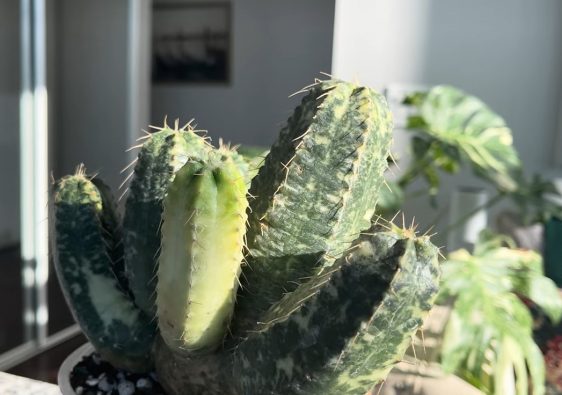
Sunburn shows up as white, tan, or light brown patches that are dry and papery, usually on the side of the plant that faces the sun most directly. It’s worth knowing that once a plant is sunburned, that patch won’t recover or turn green again. The damage is permanent on that tissue. So prevention — shading, gradual transition, avoiding direct midday sun in that first week — is always better than trying to fix it after the fact.
Some colour changes are totally normal and beautiful, though. Many cactus and succulents will blush red, purple, or orange in response to strong light and heat. That kind of stress colouring is healthy and actually quite stunning. The difference is that stress colouring is a deepening of colour across the whole plant, while sunburn is a localized bleached or papery patch.
Moving Plants Back Inside in the Fall
When nighttime temperatures start falling back below 10°C (50°F), that’s my cue to start bringing everything back in. I don’t wait for frost — I start moving things when the nights are consistently cool, usually in September or October depending on the year.
I’ll be doing a full follow-up video in the fall so you can see how everyone did over the summer and I’ll go through fall and winter care tips in detail then.
Where to Buy Cactus & Succulents
If this has you wanting to add to your collection, here are some of my favourite places to shop:
Crystal Star Nursery — one of my absolute favourites for rare and collector plants. 🌵 crystalstarnursery.com
Suc N Digs — a great source for succulents with a wonderful selection. Worth following to see what comes in. 🌵 facebook.com/sucndigs
Sunshine Lithops — if you’re into lithops and other unusual succulents this is your spot. Lithops are one of the most fascinating plants you can grow and this is a great source for them. 🌵 sunshinelithops.com
Local nurseries and garden centres across the GTA and Southern Ontario:
- Jade Gardens — Milton, ON (Trafalgar Road) — great for cactus, succulents, and tropicals
- Valleyview Gardens — Markham — plant superstore with a solid cactus and succulent section
- Vandermeer Nursery — Ajax — large garden centre with periodic hoya and specialty plant drops
- Northland Nursery — Waterdown
- Tara Greenhouses — Waterdown
- Harper’s — Hamilton
- Vermeer’s — Niagara
- Mississauga Greenhouses — Mississauga
I have videos on most of these on my channel — check the playlists for tours and hauls from each location.
Toronto Cactus & Succulent Club Annual Show & Sale — held every June at the Toronto Botanical Garden. Incredible vendors, rare finds, and a wonderfully nerdy community. I go every single year and it’s one of my favourite events on the calendar. Highly recommend it if you’re in the GTA.
Big box stores — Home Depot, Canadian Tire, and Rona are surprisingly solid for basics, especially in spring and summer. Just inspect the plants carefully before you buy — check for pests and make sure the roots aren’t rotting at the base.
Facebook Marketplace and plant groups — a genuinely great way to find offsets, pups, and cuttings from other collectors, often at very reasonable prices. Once you’re in the plant community you’ll find that people love to trade too.
One tip wherever you buy: always quarantine new plants for one to two weeks before putting them with your existing collection. It only takes one mealybug hitchhiker to create a problem. Inspect the soil, the base of the plant, and any crevices before the new plant goes near your others.
Grow Lights for Indoor Growing
If you’re keeping your cactus and succulents indoors over winter or you don’t have a sunny enough window, a good grow light makes a huge difference in keeping your plants healthy and compact through the darker months.
I use Glowrium grow lights and genuinely love them. They’ve made a real difference for my collection over winter.
Use code BELLINA for 15% off your order. 💡 glowrium.com/?ref=Bellina
Thanks so much for reading and watching.
If you found this helpful, share it with a plant friend who’s getting their collection ready for summer — they’ll thank you for it. And don’t forget to subscribe so you don’t miss the fall follow-up where I’ll show you how everyone did over the summer and walk through fall and winter care tips.
See you in the next one. 🌵